Where Moral Authority Begins | Part V: The Unbearable Virtue of Superbelt

I was nine or ten when the lashings turned end of day ritual. Before each lashing I was to undress from the waist down—pants and panties—and bend over the edge of the bed they shared, my mother and stepfather whom I called Daddy. She was never in the room, my mother, always somewhere else in the house, doing something. I imagine her, now, drinking a cup of coffee or a glass of pinot grigio or folding laundry or cleaning the kitchen because that was what she often did, clean the kitchen. She liked a tidy home and was good at keeping a tidy home. We left our outside shoes at the door.

I could hear the slide of the belt behind me each time as he pulled it from his slacks. I still have one hanging in my closet, a belt, not the slacks. I don’t remember being whipped with that belt, in particular, but it became a talisman of sorts. It had personality, like an aging college hippie in bell bottoms and loose cotton shirt, the belt low on the hip, swaggering, holding it all together. It is brown leather and wide with a big metal buckle. I wore it nearly every day in grad school at Johns Hopkins then American University. I secretly called it Superbelt, my symbol, my token, my power stolen from his waning youth, reappropriated for my cause.

The Ritual

Daddy’s preferred belt was finer, smooth leather, meant for business. It was not luxurious. It was middle class appropriate. Brown or black, usually, whichever belt he’d chosen to hold up his slacks that morning, which is to say that it was always the belt he wore, never a belt from the closet. I sometimes wondered if he chose the belt in the morning with this in mind, feeding the belt through the loops of his slacks, visualizing ripping it out that evening upon returning home, an effective routine after a hard day’s work like a fresh cocktail waiting in my mother’s hand, a kiss on the cheek. I was the kiss. The belt was his unbearable virtue….

Read the full essay at Eckleburg: “Where Moral Authority Begins | Part V: The Unbearable Virtue of Superbelt“

Where Moral Authority Begins: Part II: Bastard Out of Carolina

by Rae Cine


Trigger warnings. Spoiler alerts.

In “Where Moral Authority Begins: Part II,” I am curious about what truth costs a child and her family in Dorothy Allison’s Bastard Out of Carolina. I have obsessed over this novel for years, not only the story but also the language—authentic, textured, defined in place and socio-economics to which I am particularly drawn having grown up as a young girl in northern Appalachia. I am also in love with my paperback copy. French flaps and deckle edges. I have written about my love of French flaps. The French flap and deckle edge makes this paperback Bastard something more than a book. It is really an experience.

Allison set the novel in South Carolina but the textures are familiar to me, the way Cincinnati chili tastes of cinnamon and southern chili Tex-Mex. The spices are different but the feel is home. And so is the trauma.

Bastard reveals brutal truths through its young narrator, “Bone,” thirteen years old and a survivor of physical and sexual abuse at the hands of Glen, Bone’s stepfather, but we don’t know this in the beginning. Bone introduces her story, taking us back to when she was still inside her mama, Anney, who is fifteen:

I’ve been called Bone all my life, but my name’s Ruth Anne. I was named for and by my oldest aunt—Aunt Ruth. My mama didn’t have much to say about it, since strictly speaking, she wasn’t there. Mama and a carful of my aunts and uncles had been going out to the airport to meet one of the cousins who was on his way back from playing soldier. Aunt Alma, Aunt Ruth, and her husband, Travis, were squeezed into the front, and Mama was stretched out in back, sound asleep. Mama hadn’t adjusted to pregnant life very happily, and by the time she was eight months gone, she had a lot of trouble sleeping. She said that when she lay on her back it felt like I was crushing her, when she lay on her side it felt like I was climbing up her backbone, and there was no rest on her stomach at all. Her only comfort was the backseat of Uncle Travis’s Chevy, which was jacked up so high that it easily cradled little kids or pregnant women. Moments after lying back into that seat, Mama had fallen into her first deep sleep in eight months. She slept so hard, even the accident didn’t wake her up…. (1)

Read the full essay at Eckleburg.

Where Moral Authority Begins

Part I: Toni Morrison’s Beloved

Part II: Dorothy Allison’s Bastard Out of Carolina

Part III: Cormac McCarthy’s Child of God

Part IV: Jesmyn Ward’s Sing, Unburied, Sing


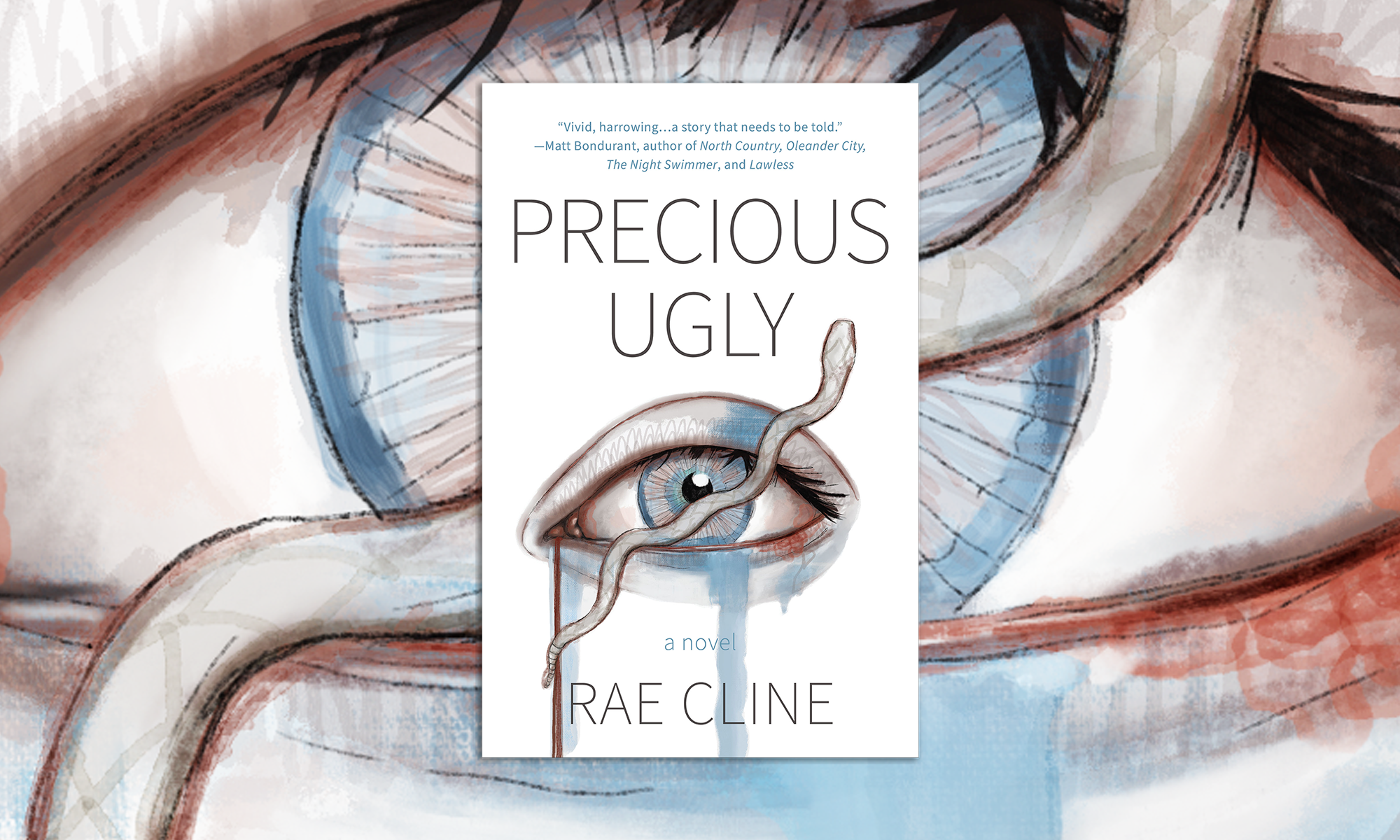
Rae Cline’s debut novel, Precious Ugly (7.13  Books), is a work of Appalachian literary fiction. It was a finalist for the Curt Johnson Prose Award and CRAFT’s First Chapters Contest. Her short fiction and essays have appeared in The Paris Review, McSweeney’s, North American Review, and StoryQuarterly. She is the founding editor of Eckleburg and lives in New York City.